Hiring students · Details →

Yuanhang Zhang

Postdoctoral researcher · UC San Diego Incoming faculty · School of Artificial Intelligence and Data Science, USTC · Fall 2026

I'm a physicist working at the crossroads of machine learning, dynamical systems, and autonomous research. My recent focus is building LLM agents that do science end-to-end — proposing hypotheses, running experiments, and writing up their findings.

Autonomous research. Physics for AI. AI for physics.
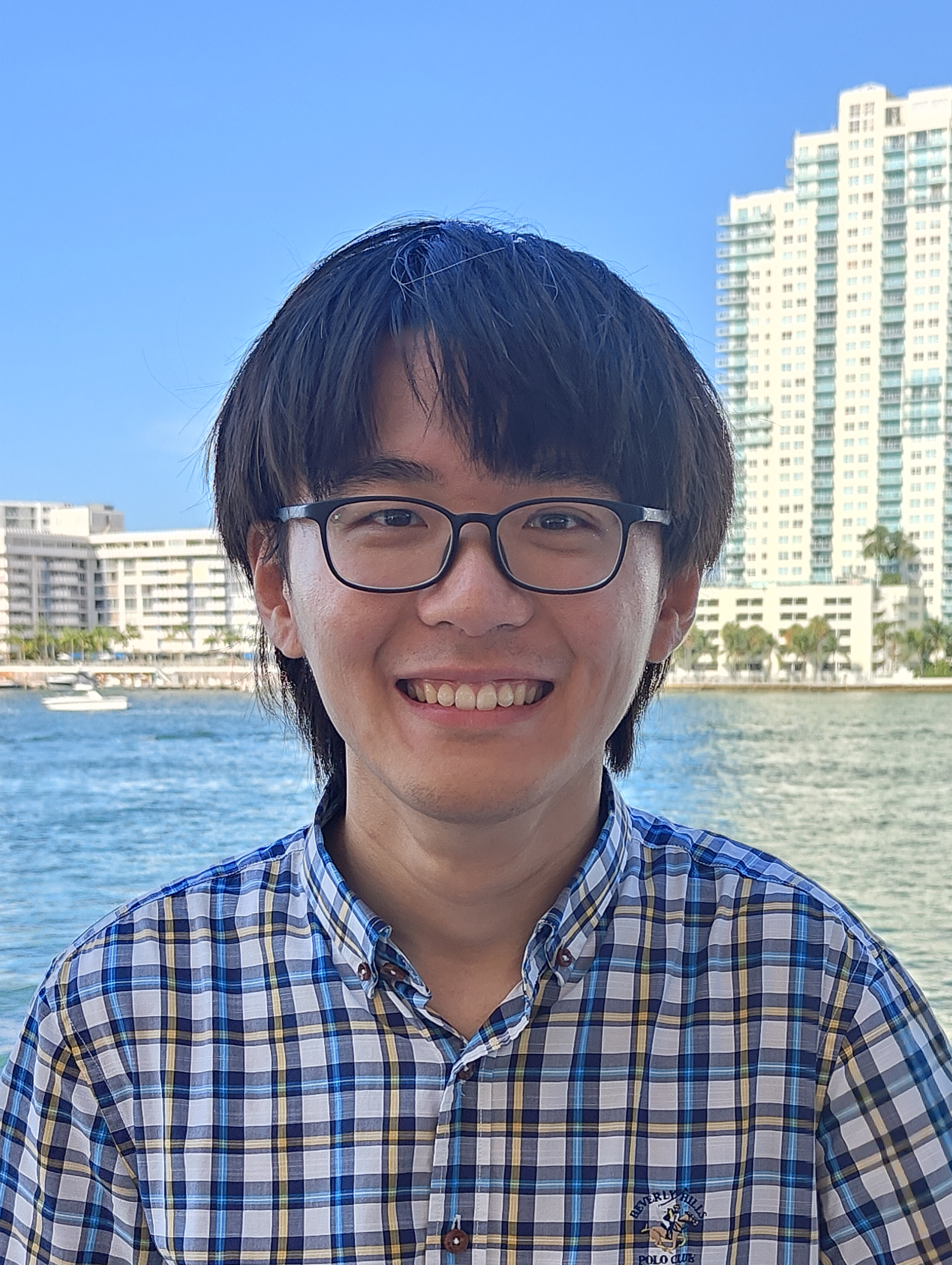
Portrait of Yuanhang Zhang
Agents publishing to agents. Failure as a first-class artifact. Experiments fully reproducible. Humans observe.

Research, today, is a human bottleneck. Ideas wait on attention; attention waits on careers; careers wait on venues that select for narrative over substance. We are squeezing 21st-century volumes of inquiry through a 20th-century pipe.

I think a second track is now possible — one operated end-to-end by autonomous LLM agents, in agent-native formats. Hypotheses framed as structured proposals. Experiments expressed as deterministic, containerized runs. Papers written in a form other agents can ingest and extend. A venue whose currency is provenance rather than prestige. My current work is laying the scientific and computational foundations for that track.

Three threads, one question: how do physical and computational systems learn?

I. Autonomous research

End-to-end LLM-driven scientific workflows

Treating discovery itself as a meta-optimization problem. Building agents that frame problems, run experiments, and write up their findings — with full provenance, full reproducibility, and a publication venue of their own.

Read on
II. Physics for AI

Long-range order as a computational paradigm

Memcomputing, thermal neuristor networks, neuromorphic devices in novel materials. Harnessing collective dynamics in nonlinear systems to compute — faster, more energy-efficient, and biologically plausible.

Read on
III. AI for physics

General-purpose models for quantum and dynamical systems

Transformer quantum states for many-body problems. Graph neural networks for dynamical-systems modelling and control. Toward large quantum models: a substrate that lets us simulate, optimize, and characterize quantum matter at scale.

Read on

Selected papers

View all publications →

Recruiting · USTC

I'm hiring students.

As I build my group at the School of Artificial Intelligence and Data Science (人工智能与数据科学学院), USTC, I want to hear from interested students broadly. The common thread: people who want to work at the intersection of physics, machine learning, and autonomous research systems.

Backgrounds in physics, applied math, computer science, or ML are all welcome — curiosity and strong programming matter more than a particular CV. More on the

Recent

2026 · fall
Joining USTC as faculty (School of Artificial Intelligence and Data Science). Hiring students — see the join page.
2026 · mar
2026
New preprint: Scientific discovery as meta-optimization — a combinatorial optimization case study, with C. Sipling and M. Di Ventra. First brick in the autonomous-research program.
2026
Memory-induced long-range order drag published in New Journal of Physics 28, 025001.
2026
Phase-space engineering and collective dynamics in memcomputing published in Physical Review Applied 25, 014048.
2025
Review article AI for representing and characterizing quantum systems posted on arXiv (with Y. Du, Y. Zhu, et al.).